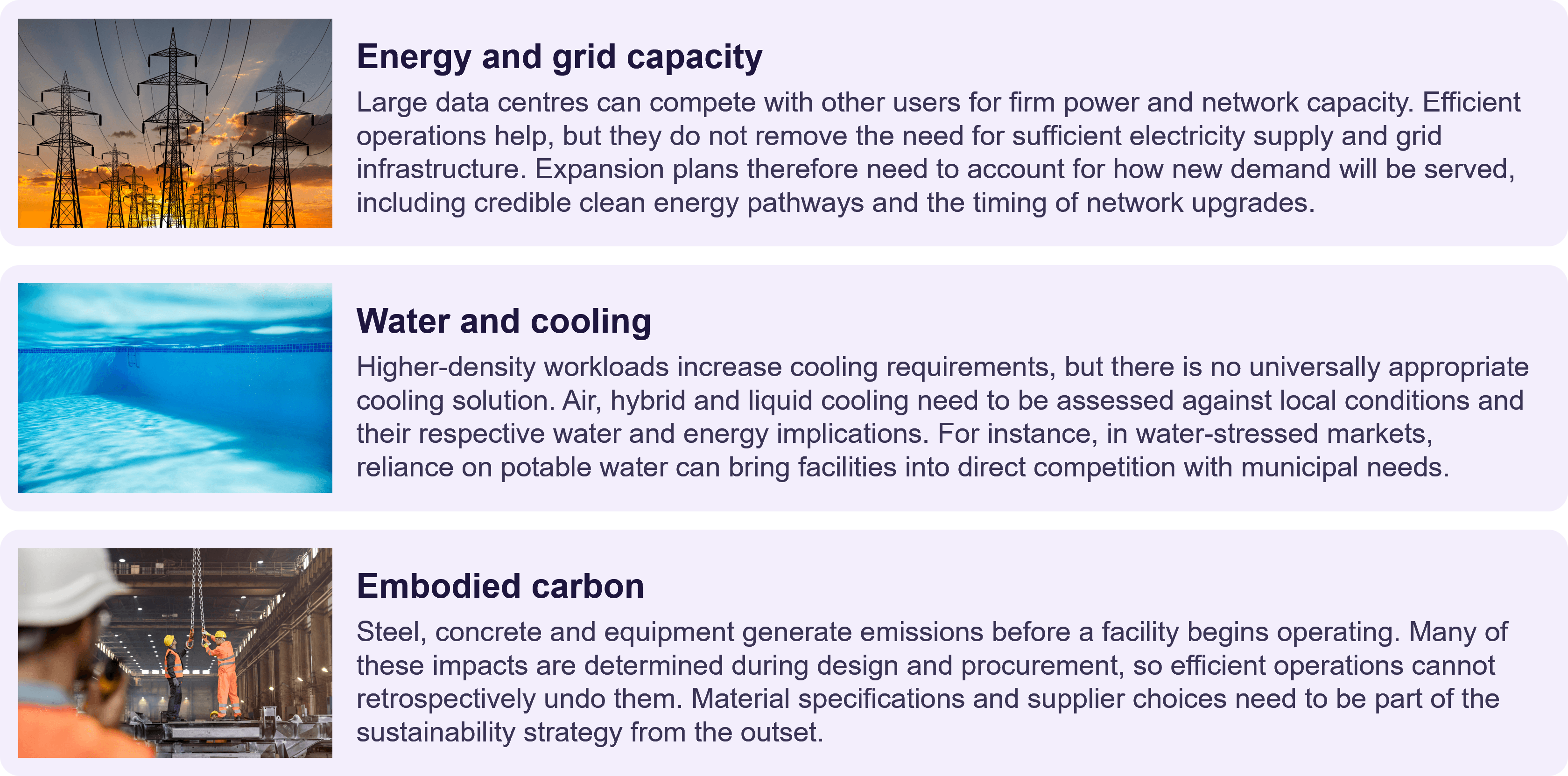
Overview: AI is often discussed in terms of what it can enable: productivity, innovation and new business models. Yet the ability to realise that value depends on physical infrastructure, including the power, water, land and equipment needed to support increasingly demanding workloads.
At the Institute of Enterprise Risk Practitioners’ (IERP®) Global Conference 2026, our Founder and Managing Director, Ivan Li, explored how these dependencies are changing the relationship between AI, sustainability and enterprise risk. The central issue is not simply whether more compute capacity can be built. It is whether that capacity can grow within local resource constraints while strengthening the systems on which it depends.
These perspectives were also published by the Institute of Enterprise Risk Practitioners in “Navigating Artificial Intelligence and Sustainability”, developed with our contribution and framed through an enterprise risk lens. This spotlight explores what those perspectives mean for data centre operators and businesses whose digital ambitions depend on resilient infrastructure.
AI growth is bringing infrastructure constraints into business strategy
AI infrastructure is rapidly moving into a new phase of scale, from facilities of five to ten megawatts towards campuses of hundreds of megawatts and, increasingly, gigawatt-scale developments. SemiAnalysis projections put this anticipated growth into context, indicating that global data centre capacity will double by 2028, with more than half of the new capacity dedicated to AI infrastructure. While these are projections, they illustrate the scale of growth being anticipated.
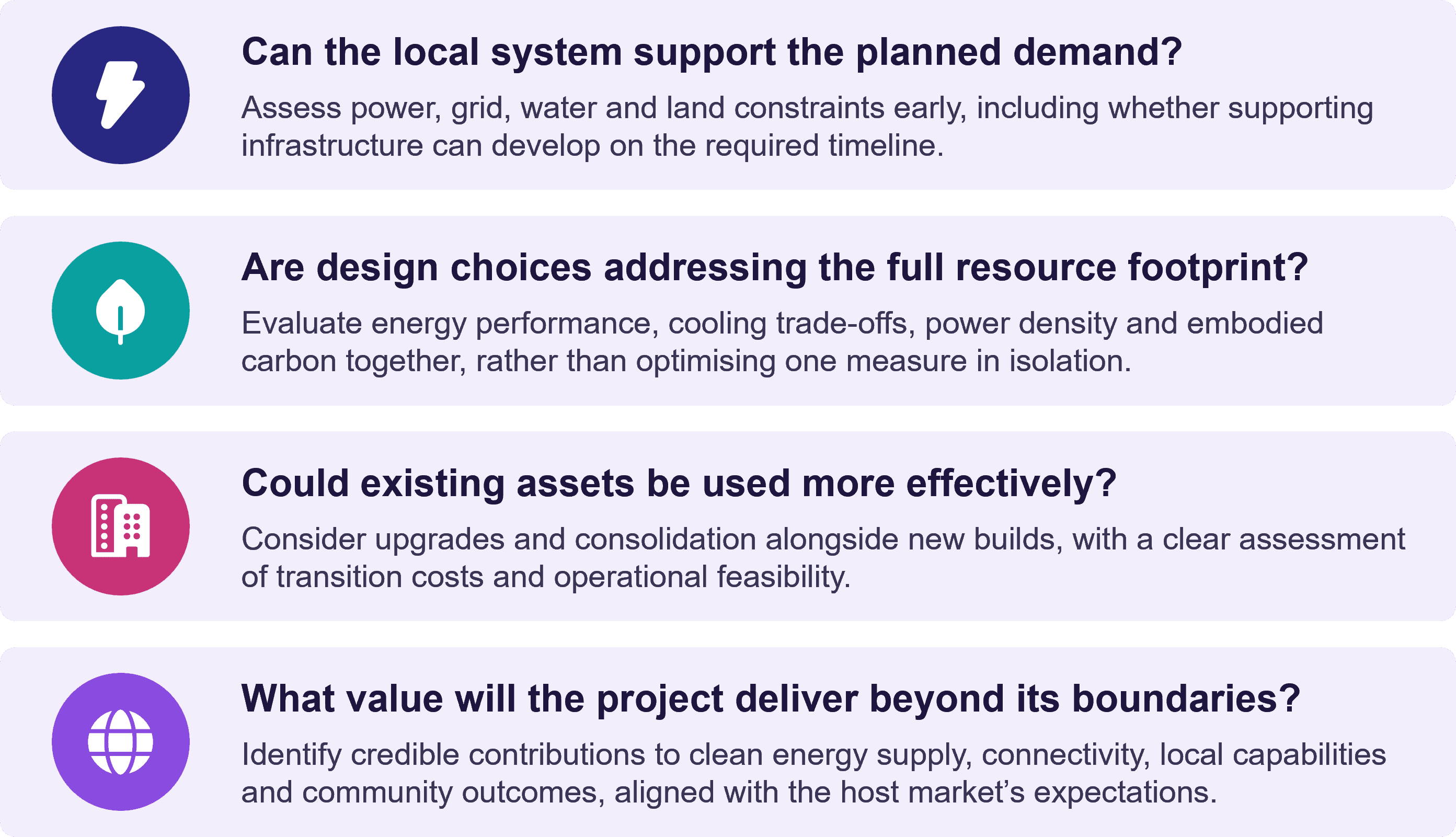
That growth cannot be assessed in isolation from the markets hosting it. Grid development, water infrastructure and land allocation operate on different timelines from technology deployment. Where new demand moves faster than supporting infrastructure, resource constraints can translate into higher costs, delayed expansion and weaker community support.